Tesla Releases Video Previewing Roadster's Cockpit Display and Thruster Status Screen
The footage showcases the specific controls and telemetry data drivers will access on the touchscreen regarding vehicle performance and aerodynamics.
By Jian Chen ·
Tesla has shared a first look at the digital interface planned for its upcoming Roadster, giving a glimpse into the specific data the vehicle will present to the driver. The company released a brief video clip on the social platform X on Friday afternoon, October 23, 2026, captioned with a reference to fighter jet designs. This release follows the unveiling of the car's physical specifications near Waco, Texas, on October 15, shifting the focus to how a driver will actually interact with that technology from behind the wheel.
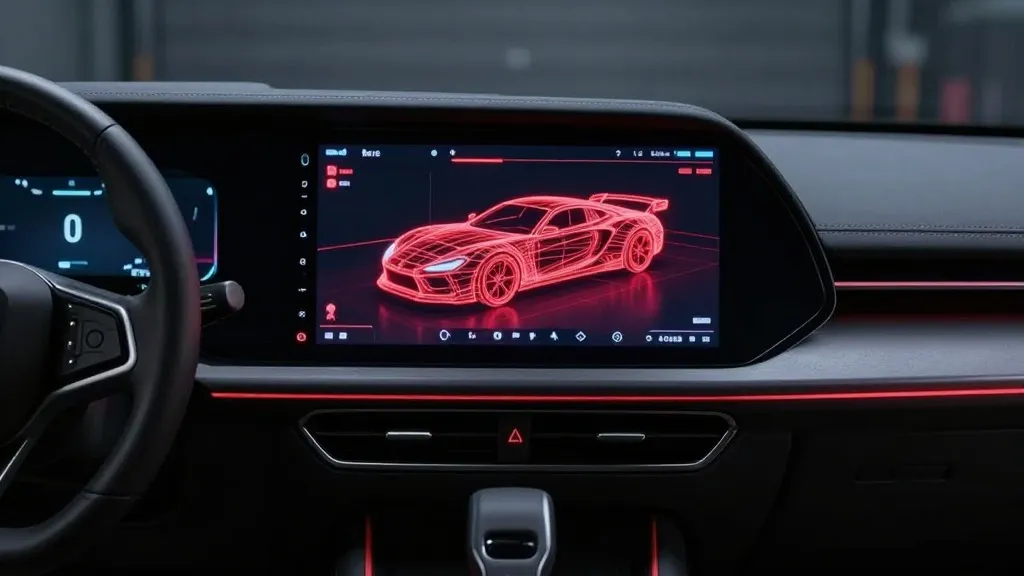
The footage begins with a dark screen featuring red graphics and a three-dimensional wireframe model of the vehicle. This digital representation sits next to a squared-off steering yoke. The interface allows users to tap on specific areas of the car model to adjust physical components, including the rear wing for settings like low drag or high downforce. The screen also provides access to a charging page with a limit bar and a small music player, while a row of navigation tabs at the bottom offers access to Home, Vehicle, Listen, Climate, and Navigate functions.
A significant portion of the video is dedicated to the car's Track Mode, a feature designed for performance driving. In this mode, the display provides a live map of the race circuit, a log of lap times for the current session, and monitoring for brake and motor temperatures. It also offers readouts for the pressure and temperature of each individual tire. A setup page within this mode allows the driver to choose between Auto, Low Drag, High Downforce, or Custom aerodynamic modes, while also adjusting aero balance and brake balance, or switching stability and traction control off.
At the bottom of the screen, a status bar displays "Thruster · 5,500 PSI" alongside an indicator that reads "Boost Ready." This gauge connects the software to hardware details Tesla previously outlined for the vehicle's thruster system, which is fed by carbon overwrapped pressure vessels. Tesla has listed acceleration times of under 0.9 seconds and under 0.59 seconds to 60 mph for specific configurations. The aerodynamic settings available on the screen correspond to the active wings and suction setup designed to generate downforce for the vehicle.
The layout of this Roadster interface differs from other Tesla vehicles. Instead of centering a map on the home page, the Roadster places the vehicle itself at the center of the screen. Tesla's Roadster page also lists two smaller forward displays alongside the main touchscreen. It remains unclear whether the Track Mode telemetry shown in the video will be available in other vehicles, such as the Model 3 Performance.
This interface could still change before the car reaches customers. Elon Musk stated at the October event that Roadster production will begin in 2028, meaning the software may undergo updates during development. Tesla has noted that the flagship Rocket version of the car is not approved for public road use. Reservations for the vehicle are open with a $50,000 payment, while the Thrust version is listed as a limited release and the Rocket version is invite only.
Those interested in seeing the physical vehicle will have an opportunity to do so very soon. The Roadster is scheduled to go on display in the lobby of the Petersen Automotive Museum in Los Angeles from October 24 to October 27. According to Sawyer Merritt, this marks the first time the public will be able to view the car up close.
The video serves as a reminder of the vehicle's capability to provide real-time performance metrics directly to the driver. By displaying information such as tire pressure and brake temperature on the main screen, the interface aims to keep the driver informed about the car's condition. This access to specific vehicle data, combined with controls for aerodynamics and driving modes, is designed to support the driver in managing the vehicle's performance.
Source: Teslarati