Cybercab Sales: Tesla Sets a 2026 Deadline
Tesla executives confirmed that the autonomous two-seater will begin reaching private customers before the end of this year, though most units will remain in the company's own fleet.
By Xiaoyu Wang ·
For months, the automotive world has been waiting for a concrete answer to a simple question: when can you actually buy a Tesla Cybercab? That uncertainty has finally ended. During the company’s third-quarter 2026 earnings call on October 21, Tesla leadership provided a definitive timeline, signaling that the long-awaited autonomous vehicle will reach private hands before the calendar year closes. This marks a significant shift from previous vague promises, giving eager buyers and industry analysts a clear target date to hold the company accountable to.
The path to this announcement has been a journey of incremental milestones that built up to this moment. Production of the Cybercab began in February of this year at the Gigafactory in Texas. By early September, the vehicle moved from the factory floor to the streets, with Tesla launching its public Robotaxi service and placing early units into active operation. However, for the last few months, the focus has been entirely on fleet integration rather than private sales, leaving individual buyers in a state of limbo while the company tested the waters with its own autonomous operations.
Lars Moravy, Tesla’s Vice President of Engineering, was the one to drop the specific timeline during the call. He stated that the company is actively trying to get Cybercabs into the hands of customers by the end of 2026. Moravy clarified that while production is currently ramping up on the line in Texas, every single unit coming off that line right now is being reserved for Tesla’s internal Robotaxi fleet. This means that the initial wave of vehicles is strictly for corporate use, not for retail purchase.
The strategy here is not to flood the market immediately. Moravy explained that as operations scale, Tesla will start delivering fully designed autonomous vehicles to individual customers, with the Cybercab serving as the first of its kind. The initial rollout of private sales is expected to be small in volume. This cautious approach allows the company to gain critical experience in managing delivery logistics, figuring out optimal ownership models, and handling the complexities of operating autonomous vehicles that are no longer under Tesla’s direct, centralized control.
Elon Musk reinforced this limited availability for private buyers during the same call. He emphasized that the Cybercab is fundamentally different from other Tesla models like the Model 3, Model Y, or the upcoming Roadster. Rather than viewing it as a personal car you park in your driveway, Musk described it primarily as a 'transport-as-a-service' offering. He made it clear that the vast majority of Cybercabs will remain Tesla-owned, functioning as part of a shared mobility network rather than private assets.
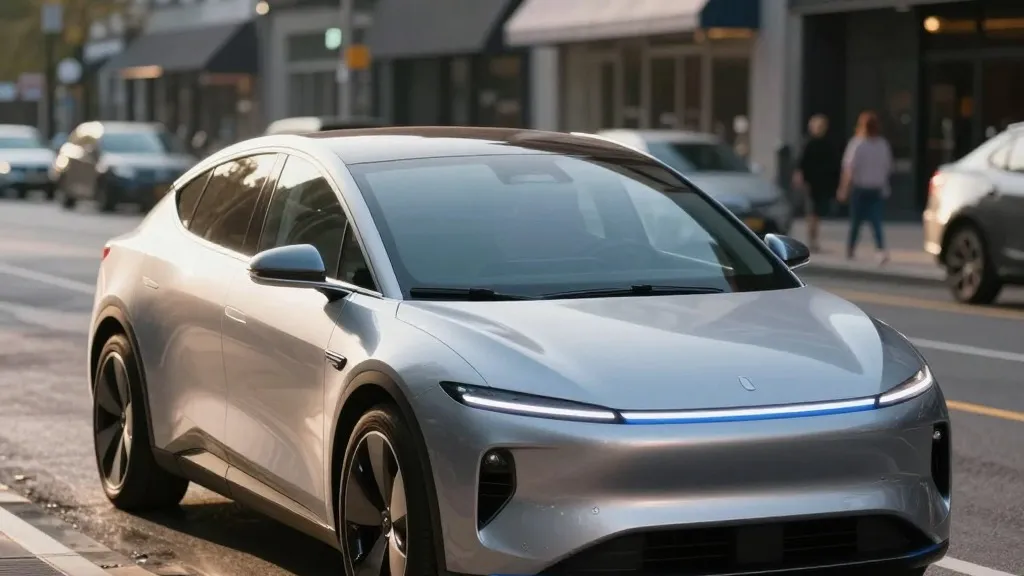
The vehicle itself is a stark departure from traditional car design. It is a two-seater that features no steering wheel and no pedals. Instead, it relies entirely on Tesla’s Full Self-Driving software to navigate the roads. Since its production began in February, the design has been consistent, focusing purely on automation and passenger comfort. The lack of manual controls underscores the company’s confidence in its autonomous capabilities, a confidence that has been tested in the real world since the Robotaxi service went public in September.
Price remains a key factor in the Cybercab’s appeal. Tesla has previously indicated that the vehicle would be priced around $30,000. This price point is significantly lower than many of its other vehicles, positioning the Cybercab as an accessible entry point into autonomous travel. However, the low cost is balanced by the fact that most buyers may not even need to purchase one if they are primarily using it as a service through Tesla’s fleet.
Looking ahead, there are still hurdles to clear before these vehicles are widely available. Ashok Elluswamy, Tesla’s Head of AI, noted during the call that unsupervised Full Self-Driving is expected to ship to consumer cars during the second quarter of 2027. This suggests that while you might buy a Cybercab this year, the full autonomous experience for personal cars is still a year away. Additionally, early buyers or fleet operators may find their vehicles geographically restricted due to lagging regulatory agencies. These regulatory constraints could limit where the cars can operate, meaning that even if you buy one now, you might not be able to drive it anywhere yet.
The next few months will be critical for Tesla as it transitions from a pure fleet operator to a hybrid model that includes private sales. The company must balance the need to scale its Robotaxi service with the logistics of delivering vehicles to individual customers. For New York and New Jersey residents, this timeline suggests that seeing these sleek, wheel-less vehicles on the road is no longer a distant future, but a reality that is arriving before the holiday season. Whether they will be private purchases or shared rides, the Cybercab is officially on the clock.
As the year draws to a close, the automotive landscape will be watching closely to see if Tesla meets this new deadline. The success of these initial deliveries will set the tone for the entire autonomous vehicle market. If Tesla can successfully navigate the logistics of private sales while maintaining the integrity of its Robotaxi fleet, it could validate the 'transport-as-a-service' model for a wider audience. For now, the wait is over, and the countdown to the first customer deliveries has begun.
Source: Teslarati