Tesla’s Humanoid Robot Rollout Slips to Late 2027 as Mechanical Flaws Persist
Tesla has pushed its Optimus delivery timeline back, citing unresolved issues with hand durability and AI generalization that mirror challenges faced by rivals.
By Yasmin Farouk ·
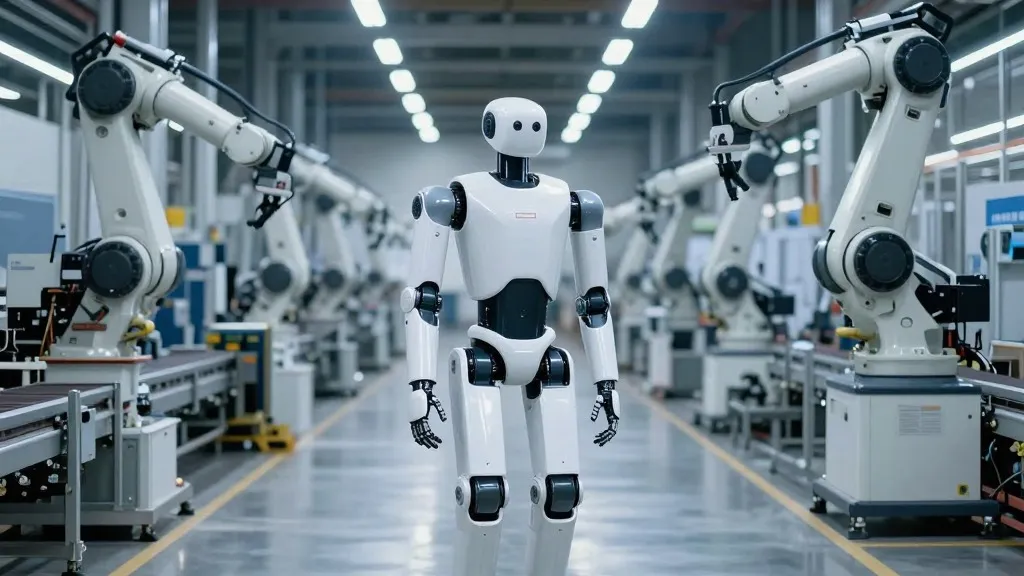
Tesla has officially postponed the commercial release of its Optimus humanoid robots until late 2027, a delay that underscores the persistent engineering hurdles facing the industry’s most hyped hardware.
During the Q3 2026 earnings call, Elon Musk confirmed that external deliveries will begin around the end of next year. While early production has commenced at the Fremont factory, where Model S and X were previously assembled, the timeline for reaching a production rate of 20,000 units per week remains uncertain. Musk identified three primary obstacles that must be resolved before mass deployment: the robot’s artificial intelligence, its electromechanical design, and overall reliability. Specifically, the dexterity of the robot’s hands remains a critical bottleneck, as engineers struggle to create fingers that are soft enough for delicate tasks yet durable enough to withstand constant industrial wear without the ability to heal like human skin. To address the AI gap, Tesla plans to build a fleet of 10,000 to 20,000 robots for an internal "Optimus Academy" to practice tasks, compensating for the lack of a data-generating fleet similar to its autonomous vehicles. The company also intends to integrate its AI5 chip into the robots by April 2027.
This latest adjustment follows a history of shifting timelines. In 2024, Musk predicted internal use in 2025 and high-volume external sales in 2026, yet the company admitted in January 2025 that no robots were performing useful work by year-end. Recent reports indicate that previous units were not production-quality, with hands and forearms containing over 100 hand-assembled parts and AI systems that could take days to learn basic movements. Despite these internal struggles, Musk maintained that no competitor is "even close" to Tesla in developing a general-purpose humanoid.
However, market competitors are progressing on parallel tracks. XPeng recently activated an automated production line for its IRON robot in Guangzhou, targeting mass production by the end of 2026 and deliveries in early 2027. Meanwhile, Hyundai’s Boston Dynamics has begun producing its electric Atlas robot, with all 2026 deployments already committed to clients like Google DeepMind. Boston Dynamics adopted a pragmatic approach to the hand-dexterity problem by prioritizing sturdy industrial grippers over human-like fingers, allowing for immediate deployment in automotive assembly lines.
The next major milestone for Tesla is a video demonstration promised within the coming month, intended to show Optimus performing unscripted tasks. This release will serve as a key indicator of whether the robot’s AI can generalize beyond pre-programmed routines. For investors and consumers, the late-2027 target suggests that while Tesla has the manufacturing scale, the challenge of creating robots that are both durable and intelligent remains unsolved across the sector.
Source: Electrek