Former OpenAI engineering lead accused of bugging conference room faces January trial
A federal judge set a Jan. 20 trial date for Abdulrahman Alfozan, who is charged with planting a recording device at OpenAI's San Francisco headquarters, and ordered prosecutors to speed up their sharing of evidence.
By News Media House Staff ·
A federal judge on Tuesday scheduled Jan. 20 for the start of the trial of Abdulrahman Alfozan, a Saudi national accused of planting a recording device in an OpenAI conference room while working at the artificial intelligence company as an engineering lead.
If the trial begins on that date in U.S. District Court in San Francisco, it would come after an unusually short interval since Alfozan's arrest in October. Federal criminal cases almost never reach trial that quickly.
Alfozan's attorney, David Rizk, requested the speedy trial after complaining at a court hearing that prosecutors have been slow to turn over evidence. Rizk also said the government has provided nothing showing his client engaged in espionage, even though prosecutors successfully argued last month that Alfozan should be detained without bail and said his alleged bugging "could pose a danger to the national security of the United States."
Among other things, prosecutors had noted that Alfozan is a venture partner at Saudi venture firm Raed Ventures alongside a member of the Saudi royal family, Prince Khalid bin Bader Al Saud. Alfozan has pleaded not guilty to one count of intercepting oral communications and faces a maximum of five years in prison if convicted.
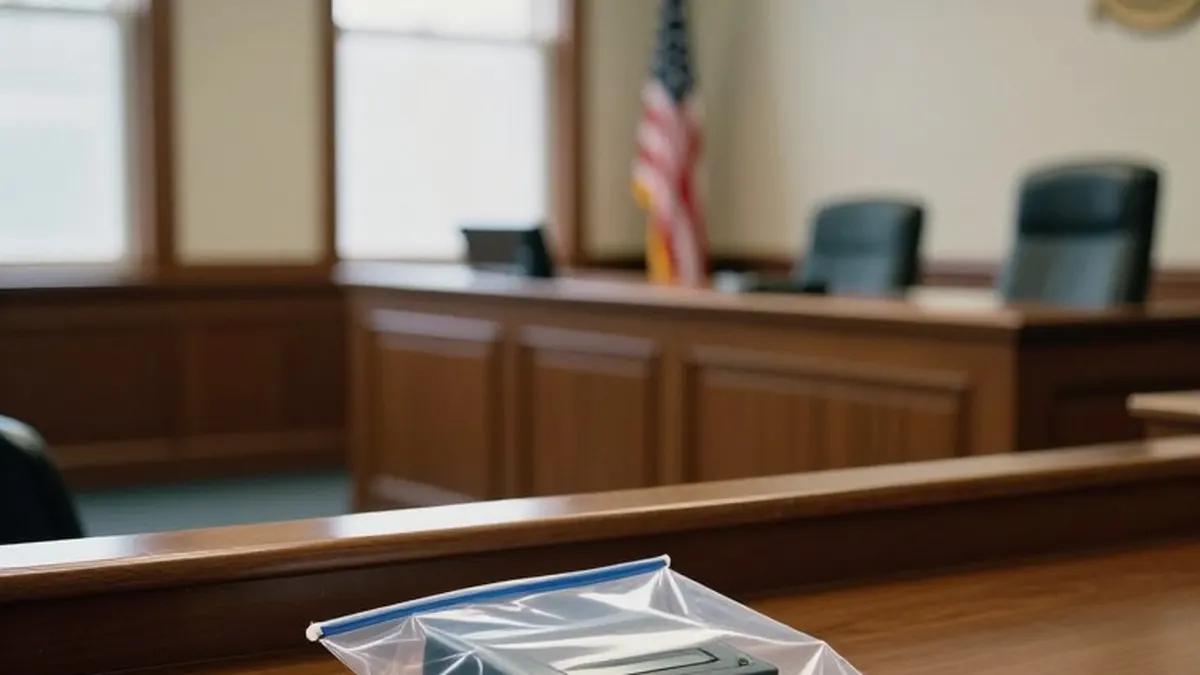
Prosecutors have said Alfozan was arrested after OpenAI staff found a recording device wrapped in toilet paper and installed behind a television in a conference room at the company's San Francisco headquarters in September. A surveillance camera captured Alfozan looking at the gadget in the room. OpenAI fired him after his arrest and has said it lacked proof that he took source code or customer data.
Assistant U.S. Attorney Nick Parker told Judge Vince Chhabria on Tuesday that investigators have been locked out of Alfozan's phone, though they have collected another phone, a tablet and two laptops, along with 160 hours of recordings from meetings in a conference room. The recording device itself is encrypted, but if its data was backed up to another device, investigators would have been able to obtain it, Parker said.
Chhabria ordered prosecutors to turn over all reports the FBI has created to the defense by Nov. 24 and to move quickly in providing other evidence for trial. "We need to make sure that you get whatever discovery you're entitled to promptly," Chhabria told Rizk.
The judge also gave Parker seven days to produce any evidence that might exist showing Alfozan carried out economic espionage, stole trade secrets or acted as an unregistered foreign agent. Parker said he was not aware of any such evidence at this time, adding, "At this point, I'm not suggesting the defendant stole anything."
Parker also told the judge his team had a "serious concern" about Rizk's plans to review evidence with an AI tool that competes with OpenAI, noting that one seized laptop might contain proprietary OpenAI data. Chhabria replied, "I'm a lot less concerned about that than you are," and ordered Parker to submit a motion by Friday explaining why the defense's use of a competing AI to analyze evidence might be a problem. Rizk told CNBC he intends to use Anthropic's Claude. Anthropic, which was founded by OpenAI employees, aims to go public on Nasdaq this week.
Originally published by News Media House
More News · National news · Report a business · Got a Story?