Diplomatic Stalls Fail to Stop Escalating Violence in DR Congo East
Despite new peace agreements in Washington and Doha, fighting continues in eastern Congo, leaving civilians displaced and questioning the effectiveness of international mediation efforts.
By News Media House Staff ·
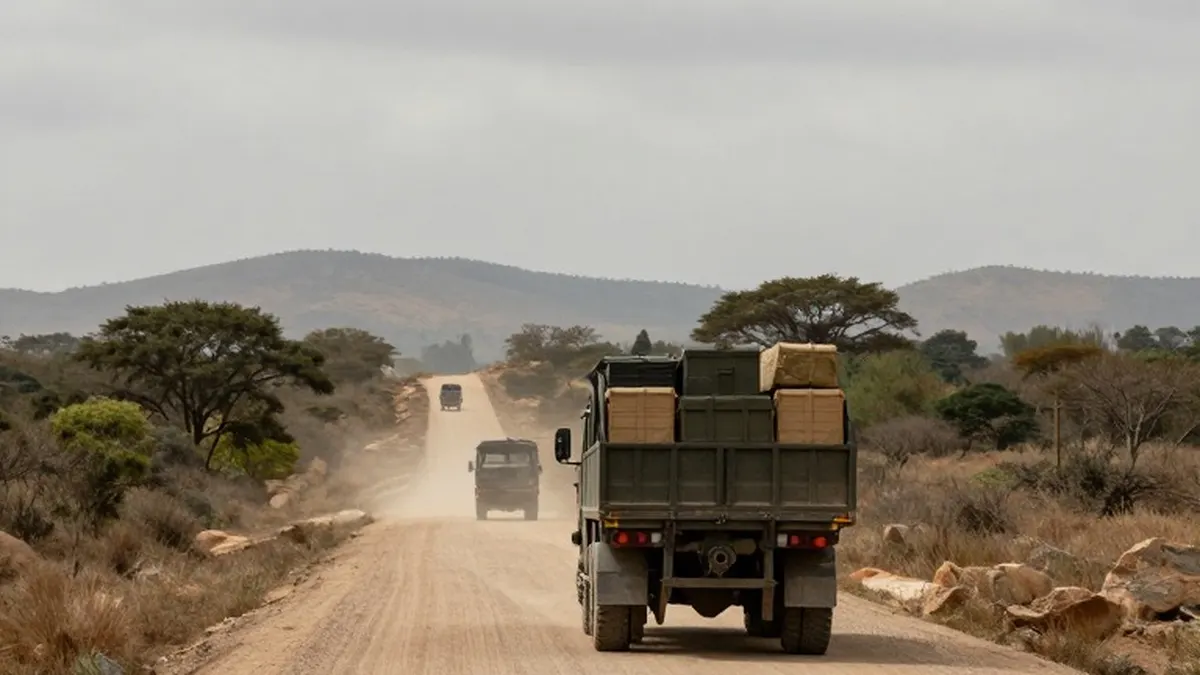
Residents of the eastern Democratic Republic of the Congo are struggling to reconcile the surge in diplomatic activity with the ongoing violence in their communities. In the provinces of North and South Kivu, clashes between the Congolese army and the Front for the Refoundation of the Nation, a coalition led by former President Joseph Kabila, have persisted despite international efforts to secure a settlement. Civilians in the region face continued attacks, displacement, and the disruption of essential services.
The current escalation has raised significant questions about the efficacy of parallel negotiation tracks in Washington and Doha. Blaise Chasumba, a resident of Bukavu, the provincial capital of South Kivu, noted that one meeting often follows another with similar outcomes. He stated that while warring parties promise peace, the reality on the ground remains harsh, with families losing loved ones and homes.
The two main diplomatic initiatives address different aspects of the conflict. The Washington Accords, signed in December 2025, aim to resolve tensions between the DRC and neighboring Rwanda. In contrast, the Doha process focuses on the conflict between the Congolese government and the Congo River Alliance, which includes the M23 armed group. Analysts note that an agreement between Kinshasa and Kigali cannot automatically resolve internal confrontations with armed groups operating within the country.
The Doha Framework for a Comprehensive Peace Agreement was signed by the DRC government, the Congo River Alliance, and M23 in November 2025. By August 2026, representatives from these parties, along with Qatar, the United States, Togo, the African Union Commission, and Switzerland, agreed on a roadmap to advance negotiations. Despite these steps, fighting has continued, highlighting the gap between diplomatic commitments and field realities.
The conflict has deep historical roots dating back to the 1994 genocide in Rwanda. The influx of former Rwandan soldiers and militia members into the region contributed to subsequent wars. The presence of armed groups linked to the genocide, including the Democratic Forces for the Liberation of Rwanda, has long been a source of friction between Kinshasa and Kigali. The First and Second Congo Wars, which began in 1996 and 1998, further complicated the region's stability.
M23 emerged in 2012 following a mutiny by former members of the National Congress for the Defence of the People. These fighters had been integrated into the Congolese army under a 2009 peace agreement that their leaders accused the government of failing to honor. The diplomatic landscape became further complicated in October 2026 when the Front for the Refoundation of the Nation was established under Kabila's leadership. The new coalition claims to have succeeded the earlier alliance and assumed its commitments, raising questions about representation in ongoing negotiations.
On the battlefield, an offensive in early November demonstrated the fragility of the peace process. Fighters advanced through Kahuzi-Biega National Park and along National Road 3, a strategic route linking Bukavu to northern areas. Reports indicated that several localities, including Bitale and the center of Bulambika, were captured on November 8. The Congolese army stated it halted the advance and was preparing a counteroffensive, though local and military accounts varied regarding the extent of territorial gains.
Humanitarian organizations have warned that the conflict is straining essential services. Doctors Without Borders announced it had reduced its staff presence in the Bunyakiri health zone, relocating personnel to Bitale and Bukavu as security deteriorated. The organization reminded all parties of their obligation to protect healthcare facilities, civilians, and staff in accordance with international humanitarian law.
The African Union has acknowledged the limited progress in implementing commitments under both the Washington and Doha processes. In a communique from late October, the bloc called for better coordination between the initiatives and urged for inclusive, nationally owned dialogue. The organization emphasized that a lasting settlement requires political engagement from wider sections of Congolese society, including women, young people, and civil society organizations.
Local advocates argue that negotiations between governments and armed groups are insufficient without a broader political process. Dieumerci Mungu Akonkwa, a coordinator for Action for Democracy and Development in the Congo, stated that the negotiations have not yet produced tangible improvements for civilians. He called for an inclusive national dialogue, pointing to proposals from church leaders, to address the underlying grievances that sustain the conflict. For many residents, the true measure of progress remains whether the fighting stops and families can safely return home.
Originally published by News Media House