Democrats target Trump's Latin America policies after midterm wins
With the new Congress seated, analysts predict changes to immigration enforcement, oil deals with Venezuela, and trade tariffs as the White House navigates its final two years.
By Gabriel Fernandez ·
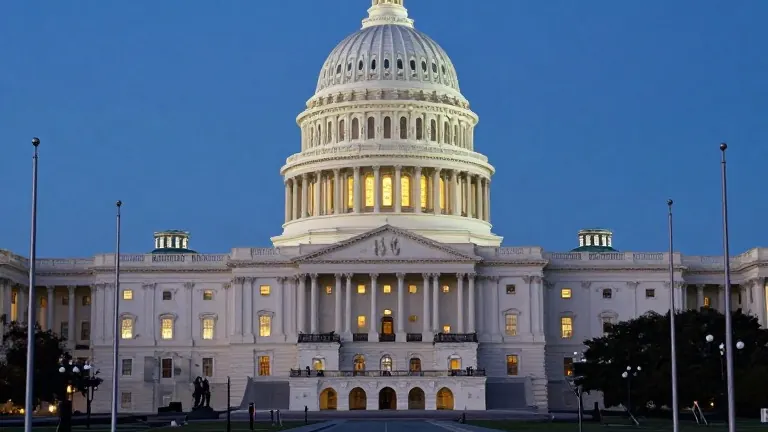
President Donald Trump’s administration faces a new legislative reality after Democrats won the midterm elections. The party’s victory gives them control over key levers of power that could alter U.S. policy in Latin America during the president’s final two years in office. Analysts in Mexico City and Washington are already mapping where conflicts will arise.
Immigration enforcement remains the first point of friction. Secretary of Homeland Security Markwayne Mullin posted on X that deportations will continue. However, local governments in Texas have begun to push back. The cities of Houston and Austin announced plans to limit police cooperation with U.S. Immigration and Customs Enforcement agents. This trend may spread as Gina Hinojosa, a vocal critic of ICE, takes office as governor of Texas in January 2027. Former Mexican Ambassador Martha Bárcena said she hopes increased collaboration among U.S. and Mexican officials will help curb the cruelty of ICE operations.
Security cooperation between the two countries is expected to tighten. Mexican analyst David Saucedo said Mexico offers the best opportunity for short-term results, such as more arrests and extraditions. The heads of Mexico’s security apparatus met with the U.S. Drug Enforcement Administration last week to strengthen joint efforts against cartels. The U.S. Army and Navy will likely maintain joint operations under the Shield of the Americas initiative. Saucedo noted that this approach does not require large new Congressional funding.
The use of U.S. military force in the Caribbean and Pacific will face closer scrutiny. Boat strikes in the region have killed at least 240 people. Democratic lawmakers have already called for an investigation into the legality of these actions. This oversight could constrain the White House’s ability to deploy force without Congressional approval.
Venezuela is a top priority for the new Democratic Congress. Lawmakers are demanding investigations into who benefited from oil agreements signed between the Trump administration and Caracas. Christopher Sabatini of Chatham House expects Democrats to pursue hearings on these deals. He also anticipates increased pressure for the holding of elections in Venezuela. However, the tense relationship between Democrats and opposition leader María Corina Machado, a Trump ally, could hinder progress.
Cuba remains a target for U.S. pressure. Secretary of State Marco Rubio announced further sanctions against the island two days after the election. José Briceño of the Mexican Center for Research on Latin America and the Caribbean said a military operation against the island is unlikely due to its complexity. Yet, Orlando J. Pérez of the University of North Texas wrote that a secretary of state with presidential ambitions has every incentive to seek a quick result in Cuba.
Trade policy will also face pressure. The economy was a key issue for U.S. voters. Mariana Aparicio of the National Autonomous University of Mexico said tariffs that fueled inflation for businesses and consumers are likely to be targeted. She predicted Trump will continue to use tariffs as a tool for political leverage. Mexican Economy Secretary Marcelo Ebrard said tariffs are unlikely to change much, but he suggested the new Congress could make adjustments to the North American Free Trade Agreement.
Economic support for Latin American governments aligned with the White House will likely continue. However, analysts said it is unlikely Trump will repeat the $20 billion support package for Argentina’s Javier Milei seen in late 2025. Brazil will stand as the main counterweight to Washington under President Luiz Inácio Lula da Silva. Mexican President Claudia Sheinbaum has walked a fine line with the administration and is expected to maintain that balance.