
Create Streets report: Kerbside swaps could double street spending
Replacing parking with bike racks or dining areas generates significantly higher annual revenue for local retailers than traditional vehicle storage, according to new economic modeling.
By Lucia Weber ·
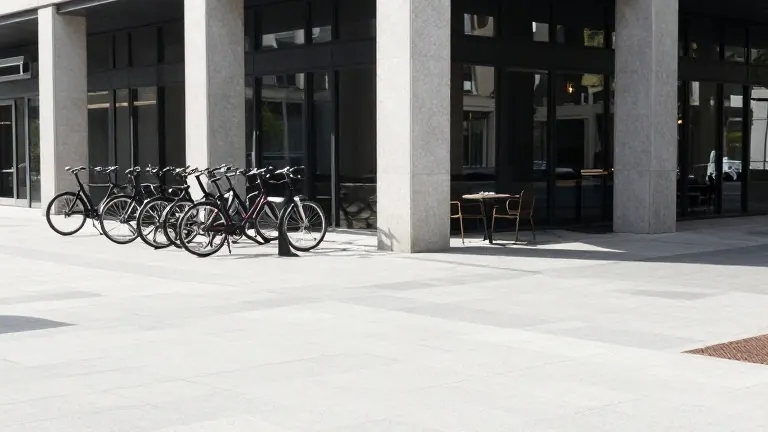
A single high-street parking space in a market town typically serves 3.5 vehicles per day. This usage generates approximately £73,000 in annual spending for nearby shops. A new report from the urban thinktank Create Streets argues that this model leaves economic value on the table. The organization, which produced the study with Cyclehoop, suggests that repurposing the same 12 square meters of kerbside space can yield double or triple that figure.
The report calculates that nine share e-bikes occupying that same footprint generate an average of 13 trips per day. This activity drives over £146,000 in annual spending, even after accounting for lower individual ticket sizes. In busier urban centers where bike usage is higher, the estimated annual spend from that single space rises to more than £300,000. Outside dining areas offer a more modest gain. In a city center, repurposing parking for seating still adds roughly £120,000 in extra annual spending.
Create Streets contends that current planning regulations favor conformity and treat speeding cars as a fixed variable. The report criticizes the standard approach to street design, describing the typical high street as engineered for traffic rather than for people. It points to guardrails, plastic planters, and catalog-style litter bins as examples of public investment that adds cost without adding appeal. The study recommends a presumption of removal for street items that cannot be strictly justified.
David Milner of Create Streets stated that streets often appear ugly because the system counts maintenance liabilities rather than benefits. He noted that effective improvements are cheap, citing trees planted in the ground and benches people actually want to use. Milner argued that current construction often looks temporary, resembling roadworks rather than permanent public realm improvements. He urged a shift toward permanence, such as planting trees in soil instead of using giant plant pots.
The report emphasizes that pedestrian safety is a key economic driver. It calls the removal of pedestrian guardrails the most cost-effective upgrade for most high streets. These barriers are described as eyesores with minimal safety benefits. The study uses the concept of the wrist test as a metric for a healthy high street. This test asks whether it feels safe to let a young child roam freely without holding their wrist.
Evidence supports the economic case for car-free zones. In Altrincham, Cheshire, the creation of a walkable urban area helped retail vacancies fall from over 30% to 7% in less than a decade. Smaller interventions can also succeed. An unused patch of land next to a church in Grimsby was turned into a park for less than £20,000. These examples demonstrate that physical changes do not require multimillion-pound revamps to produce measurable results.
Prime Minister Andy Burnham pledged to reverse the decline of high streets in September by announcing a £210m regeneration fund. The bulk of this money is allocated to buildings, such as converting old shops into shared workspaces or community cafes. The Create Streets report argues that renovating interiors is pointless if the street outside remains unappealing. It urges policymakers to focus on the kerbside environment to support these building-level investments.
The Ministry of Housing, Communities and Local Government responded to the findings. A spokesperson said the department supports local leaders in making decisions on pedestrianization based on community needs. The ministry stated that its Hope on the High Street strategy helps local people revive town centers by protecting community assets. It also aims to bring derelict buildings back into use and tackle the spread of vape and gambling shops. Funding remains available for local leaders to prioritize pedestrianization and regeneration.
The report calls for a cultural rethink in how public space is managed. It criticizes policy guidelines like Secured by Design, which can lead to the removal of benches and plants on police advice. The study argues that these measures are often taken to discourage antisocial behavior but can make streets feel sterile. Create Streets suggests that reducing clutter and traffic speed will create a more inviting environment for families and shoppers alike.
More Business · Scam Watch · Report a business · Got a Story?